Target
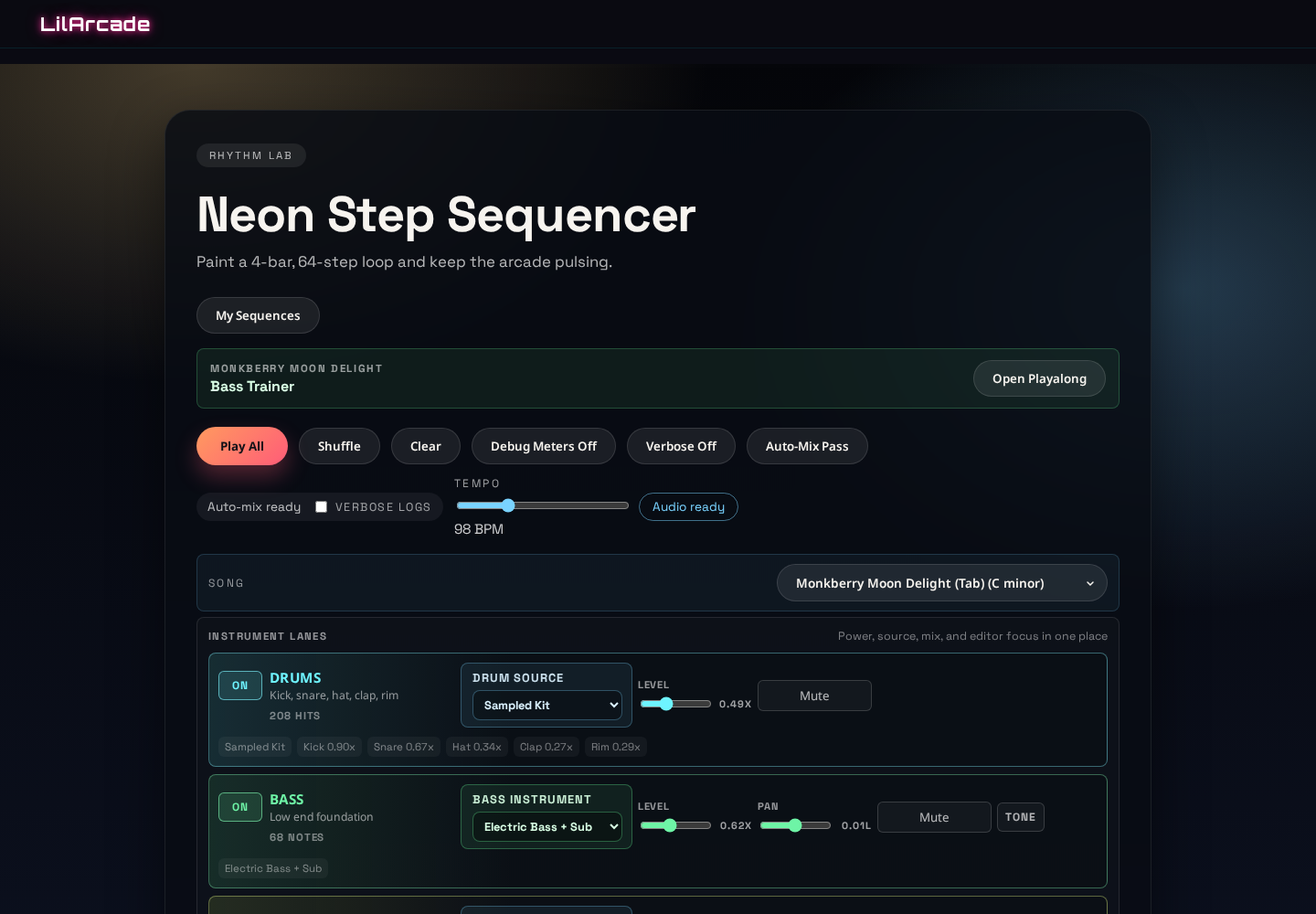
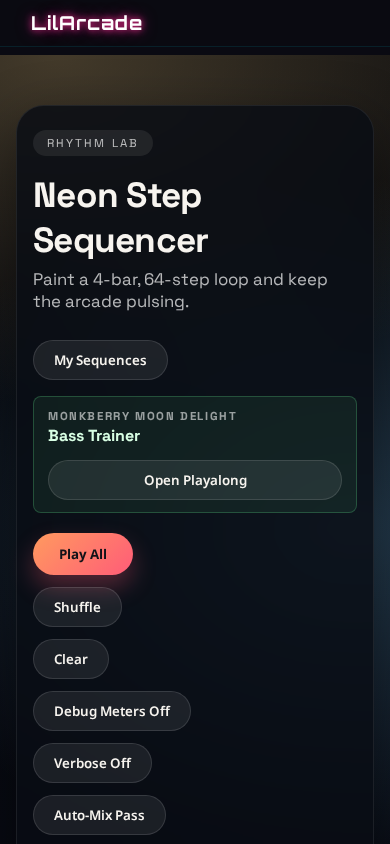
/games/drum-sequencer with the Monkberry Moon Delight tab fixture, profile mix, trainer view, and bass focus.
Neon Step Sequencer tested the new Riddle Proof architecture by building reusable audio-mix packs, a tiny app contract, and live proof runs against a running browser target. The result is not just a pass. It is a sharper way to ask the next proof question.
Claim: when the user applies a mix change in Neon Step Sequencer, the visible mixer state, app proof contract, and rendered offline audio metrics should agree.
/games/drum-sequencer with the Monkberry Moon Delight tab fixture, profile mix, trainer view, and bass focus.
Capture the Neon proof contract, prepare audio sources, render offline metrics, optionally edit a mixer level, and capture screenshots.
Objective guardrails can pass. Subjective mix taste remains a human-review claim with a separate rubric.
@riddledc/riddle-proof-packs/audio-mix reusable audio-mix authoring material.@riddledc/riddle-proof-packs/neon-step-sequencer app-specific profiles and examples.src/proof/neonProofContract.ts in LilArcade for a small, live app proof contract.{
"evidence_role_pattern": "interaction_snapshots",
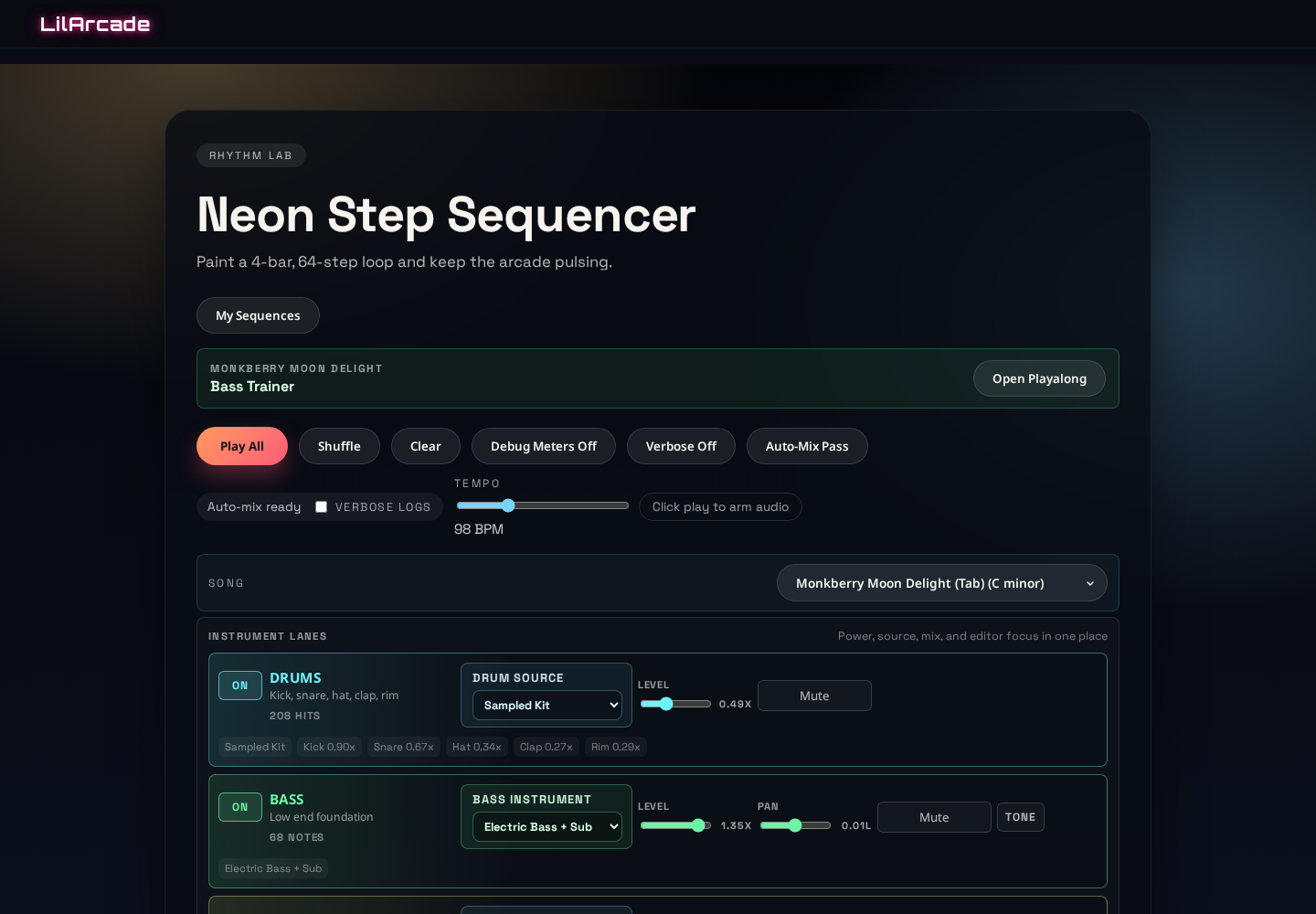
"claim": "Bass-level edit moves rendered audio metrics",
"pre_action": { "bass_rms": 0.0507, "mix_rms": 0.073 },
"post_action": { "bass_rms": 0.1071, "mix_rms": 0.1264 },
"verdict": "passed",
"does_not_prove": ["subjective mix quality"]
}The useful boundary was a tiny Neon proof contract exposing selected song, mixer state, source state, playback state, source preparation, offline metrics, and diagnostic receipts.
The first three runs improved confidence by editing profile JSON, pack docs, and the app proof contract. Riddle Proof core stayed stable.
Runs 002 and 003 wrote complete passing artifacts, then the wrapper process lingered after artifact write. That is a runner shutdown follow-up, not a Neon product failure.